The workbench
Eight close photographs of alteration tools and materials, licensed for commercial use and listed with their sources in ASSET_SOURCES.md. None is presented as work completed by this business.
-
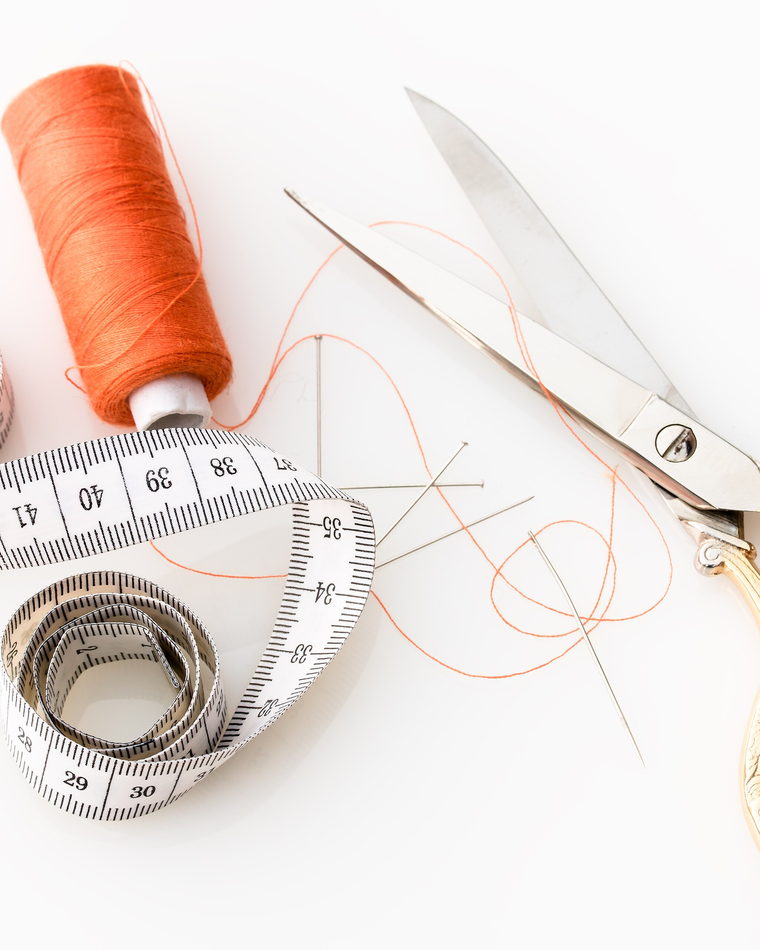
01 Shears, tape and thread: the three things every job starts with. The shears are kept for cloth alone, because a pair blunted on paper chews through a seam allowance instead of cutting it cleanly. -
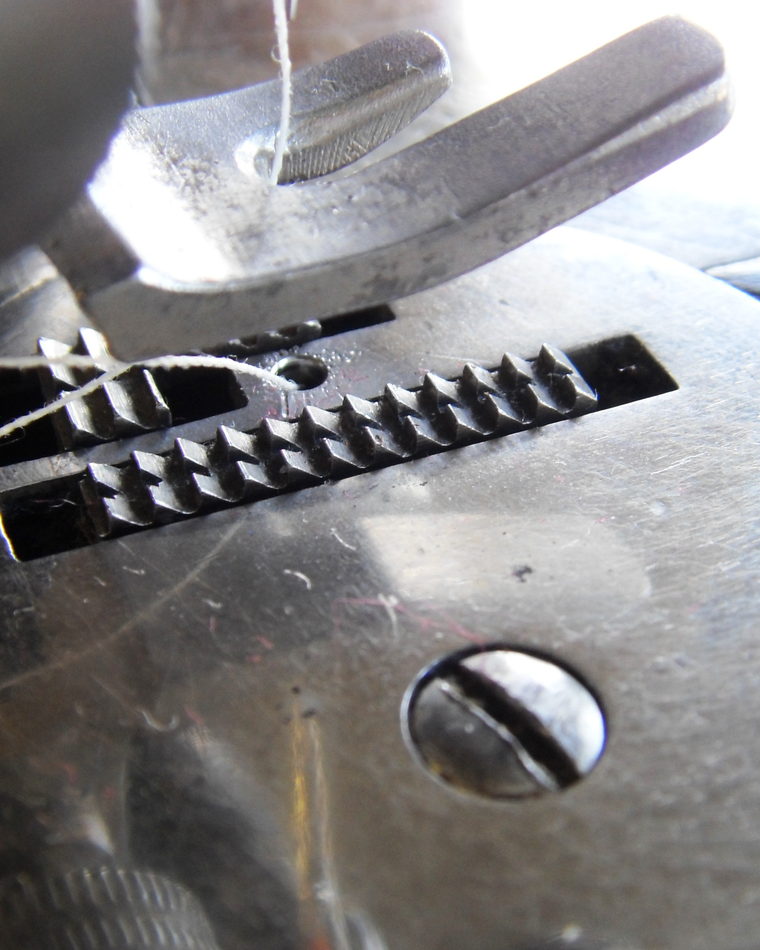
02 The feed dogs and presser foot of a straight-stitch machine, magnified. Their grip decides how evenly two layers travel, which is why a slippery lining is sewn far more slowly than a wool trouser. -
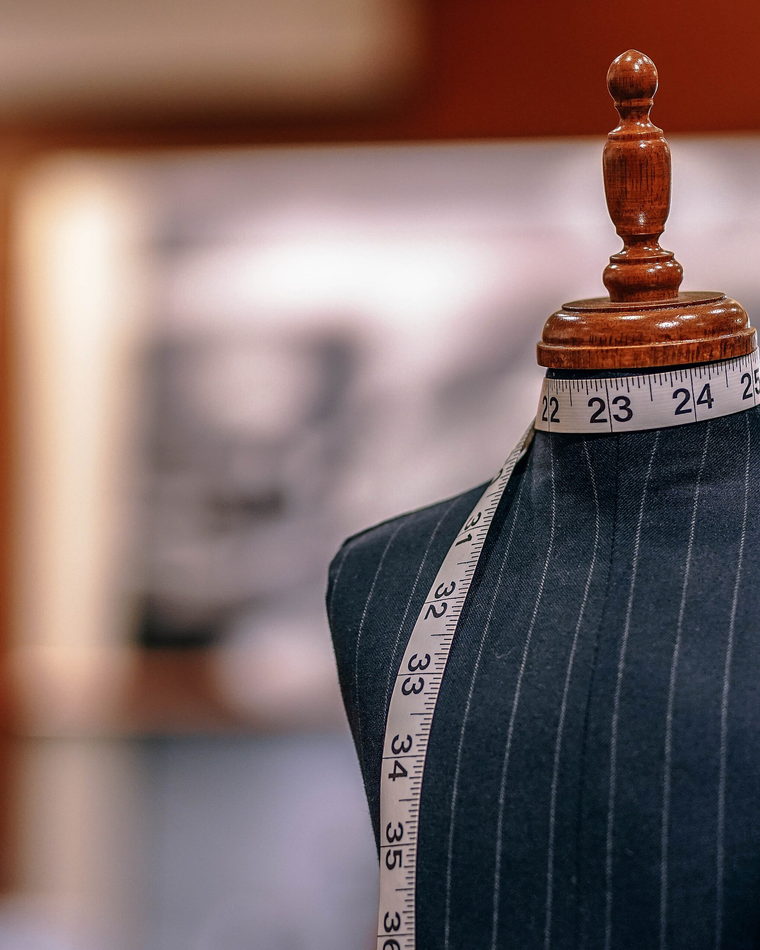
03 A dress stand with a tape over the shoulder. The stand holds a garment in shape while a seam is opened, so the cloth can be read hanging as it will be worn rather than flat on the bench. -
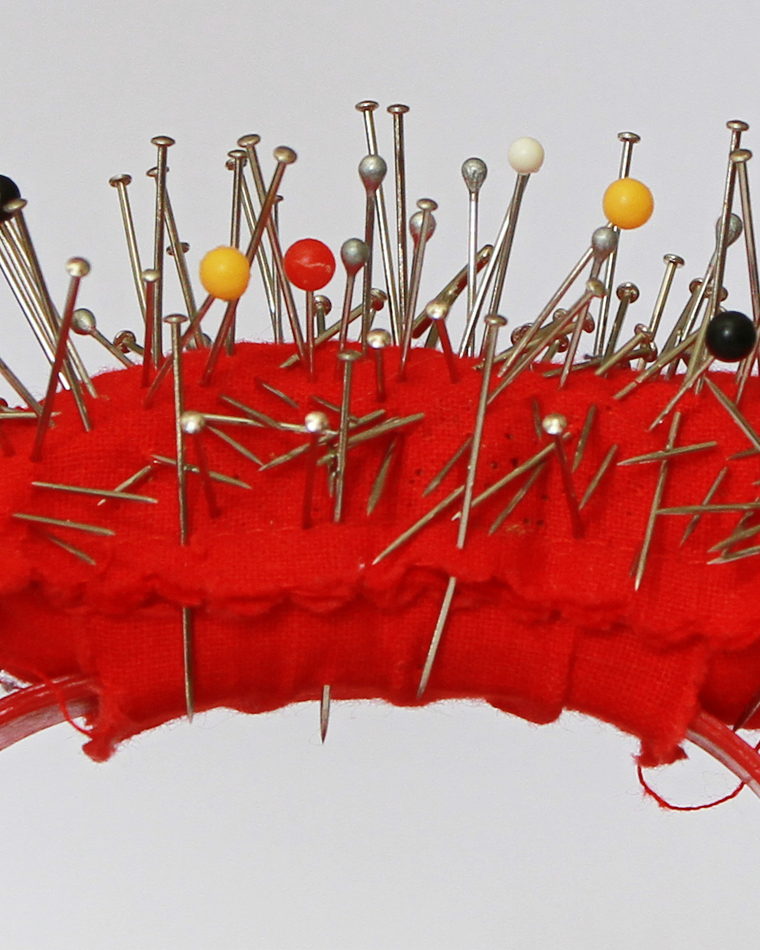
04 Glass-headed pins in a pincushion. Pins hold what chalk cannot: a fold that has to survive being taken off, carried across the workshop and sewn without shifting by more than a millimetre. -
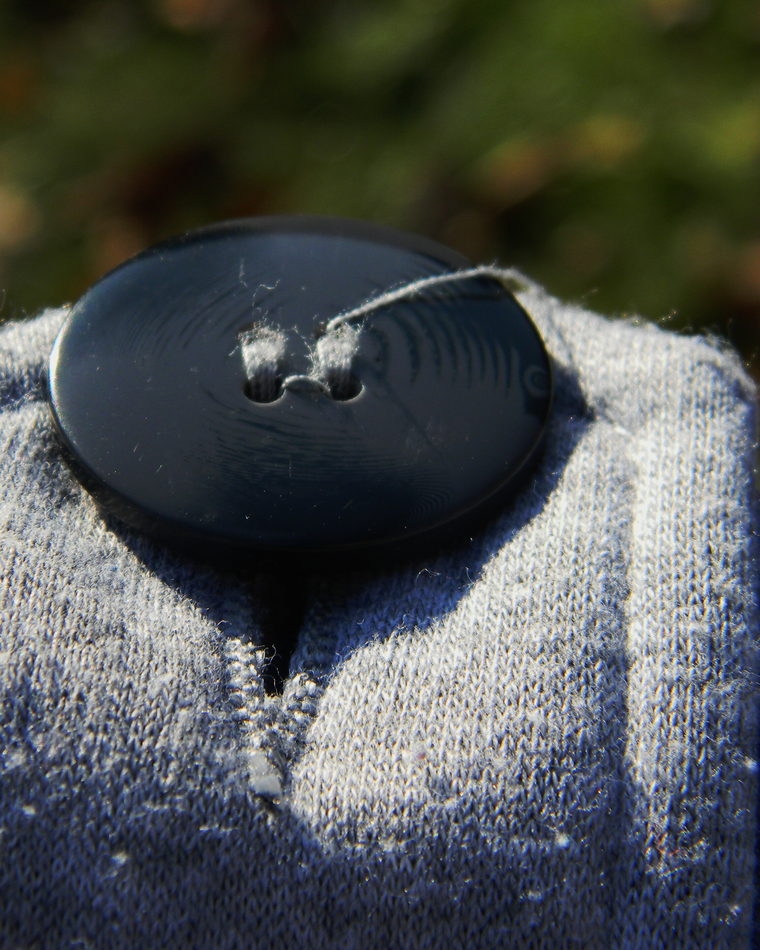
05 A four-hole button sewn onto blue cloth. A replacement is matched by size, shank height and hole spacing before colour, because a button sitting proud of the cloth pulls the whole front out of line. -
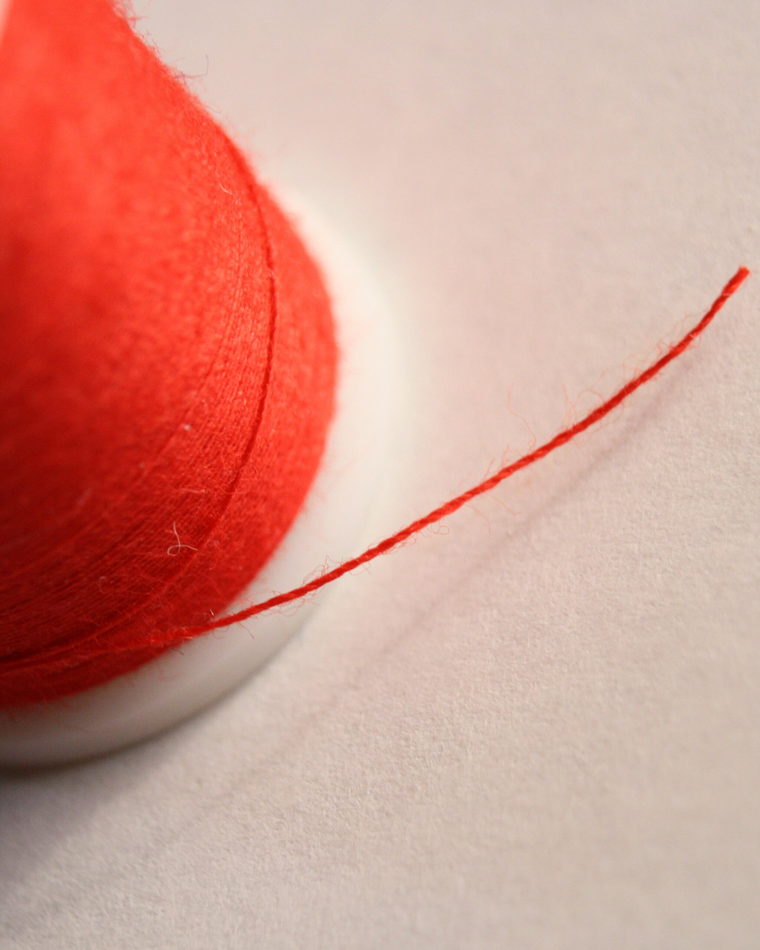
06 A wooden spool of red thread. Thread is matched to the garment before the machine is threaded, and the match is made in daylight, where a near miss shows up in a way that lamplight hides. -
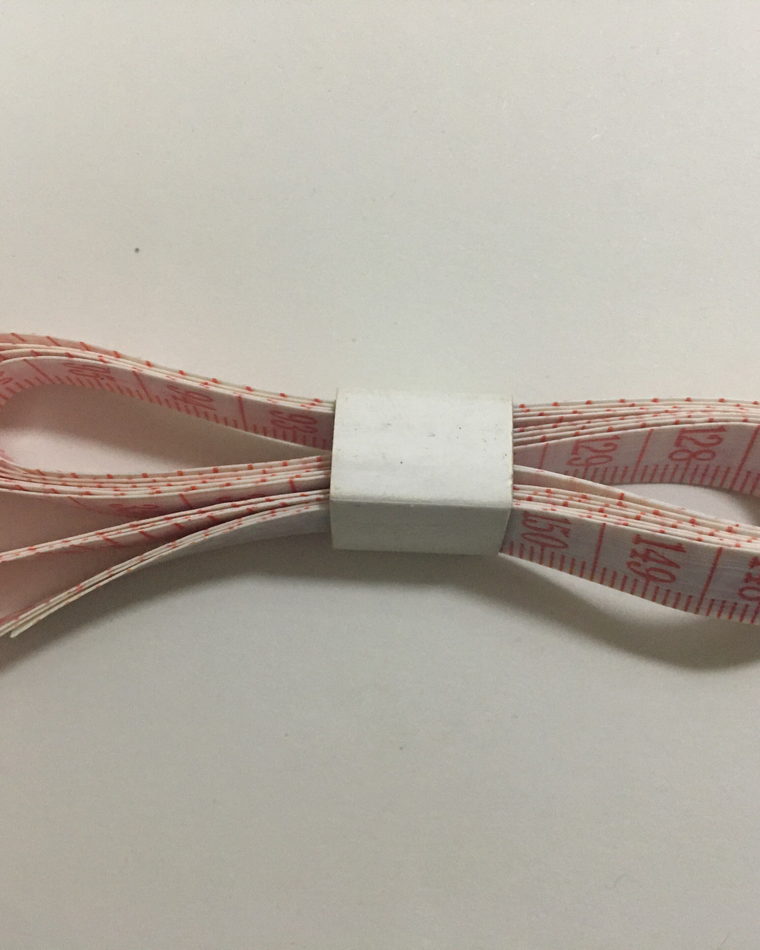
07 A soft tape marked in centimetres. Every figure written on a fitting card comes off a tape like this one, taken over the clothes the garment will be worn with rather than against the skin. -
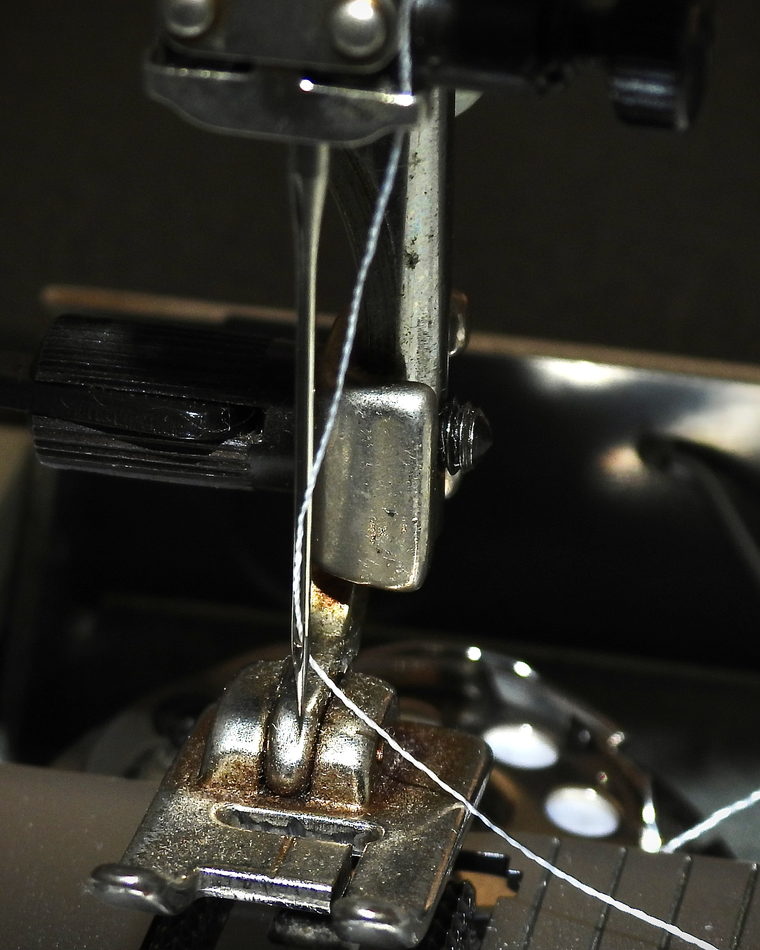
08 The needle and presser foot seen from close to the needle plate. Needle size changes with the cloth: a fine silk will not take a heavy point, and a coat seam will bend a fine one.
Before, on the bench, finished
The three stages an alteration passes through, shown with three of the same licensed photographs used above. They illustrate the stages of the work. None of them is a photograph of a garment altered by this business.
-
Before
The garment is read first. It is worn or hung in shape, the change is agreed in words, and the marks are made on the cloth itself rather than taken from a size chart.
-
On the bench
The seam is opened, the new line is sewn to the marks, and the layers are fed at a speed the cloth will take. Linings are altered with the shell, not after it.
-
Finished
The work is pressed and checked against the marks, then tried on again at collection so anything that has moved can be corrected while the garment is still here.
Ask about a garment
A description of the garment and the result wanted is enough to start. The workshop replies with the times a fitting can be held.